
Ship Detector
Languages Used: Python3, TensorFlow, Keras, OpenCV
Source Code: GitHub Link
Goal
The primary objective of this project is to accurately detect ships in aerial imagery using Convolutional Neural Networks (CNNs). A major focus of this research is to analyze how pre-processing raw dataset images using Digital Image Processing (DIP) techniques impacts the training loss, accuracy, and overall performance of deep learning models like UNET, VGG, and custom-built CNNs.
Overview
- Custom DIP Pipeline: A robust image pre-processing pipeline that applies Binarization, Histogram Equalization, Unsharp Masking, and Median Smoothing to aerial images before feeding them into the models.
- Multi-Model Architecture: Evaluates and compares the performance of industry-standard models (UNET, VGG) alongside a custom-built CNN.
- Comparative DIP Analysis: A direct performance comparison showing how models perform on raw data versus DIP-enhanced data.
- Loss Optimization: Detailed tracking of UNET’s loss function to visualize convergence improvements when trained on processed datasets.
Methodology
1. Data Pre-processing
Aerial images often suffer from noise, varying contrast, and weather conditions. To tackle this, the raw dataset is passed through several image processing kernels:
- Histogram Equalization: Enhances contrast, making the ships stand out against the water.
- Binarization: Simplifies the image data to highlight distinct shapes.
- Smoothing & Unsharping: Reduces noise (using median smoothing) while keeping the edges of the ships sharp for the CNN to detect.
2. Model Training & Evaluation
The processed images (along with the raw control group) are used to train three distinct architectures:
- Custom CNN Model: A baseline lightweight convolutional network.
- UNET: Primarily used to evaluate precise localization and feature mapping.
- VGG: Used for robust feature extraction.
Results and Performance
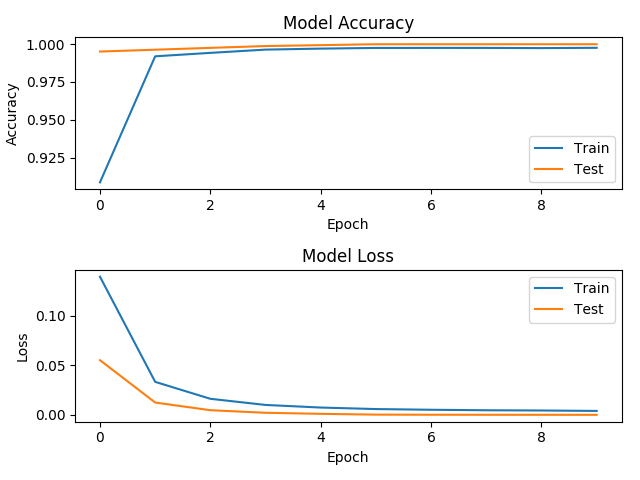
The core finding of this project is the measurable difference in the Loss Function when applying Digital Image Processing (DIP).
- Without DIP: The custom model struggles with background noise, leading to higher loss and slower convergence.
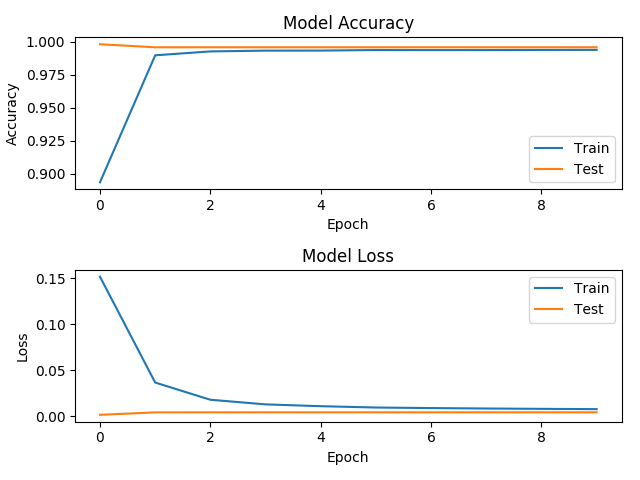
- With DIP: The application of our image processing pipeline yields a significantly smoother loss curve, faster convergence, and better overall ship detection accuracy.
References
You can fork the project on GitHub to add more features to the project.