
nanoGPT (Custom Transformer Implementation)
Languages & Tools Used: Python, PyTorch, CUDA
Focus Area: Generative AI, Large Language Models (LLMs), Natural Language Processing
Source Code: GitHub Link
Goal
The objective of this project is to build and train a lightweight, efficient implementation of the GPT (Generative Pre-trained Transformer) architecture from scratch. Based on the fundamental concepts of attention mechanisms, this repository serves as a deep dive into the inner workings of modern Large Language Models, optimizing the training loop for custom text datasets.
Key Features
- From-Scratch Transformer Architecture: Implements the core building blocks of GPT, including Multi-Head Self-Attention, Feed-Forward layers, and Positional Encodings.
- Efficient Training Pipeline: Utilizes PyTorch optimizations for faster convergence and memory management, capable of running on single consumer-grade GPUs.
- Custom Tokenization: Implements character-level or sub-word tokenization to efficiently convert raw text into sequence data for the model.
- Text Generation: Features a sampling pipeline to generate novel, context-aware text sequences based on a trained checkpoint.
Architecture & Visual Flow
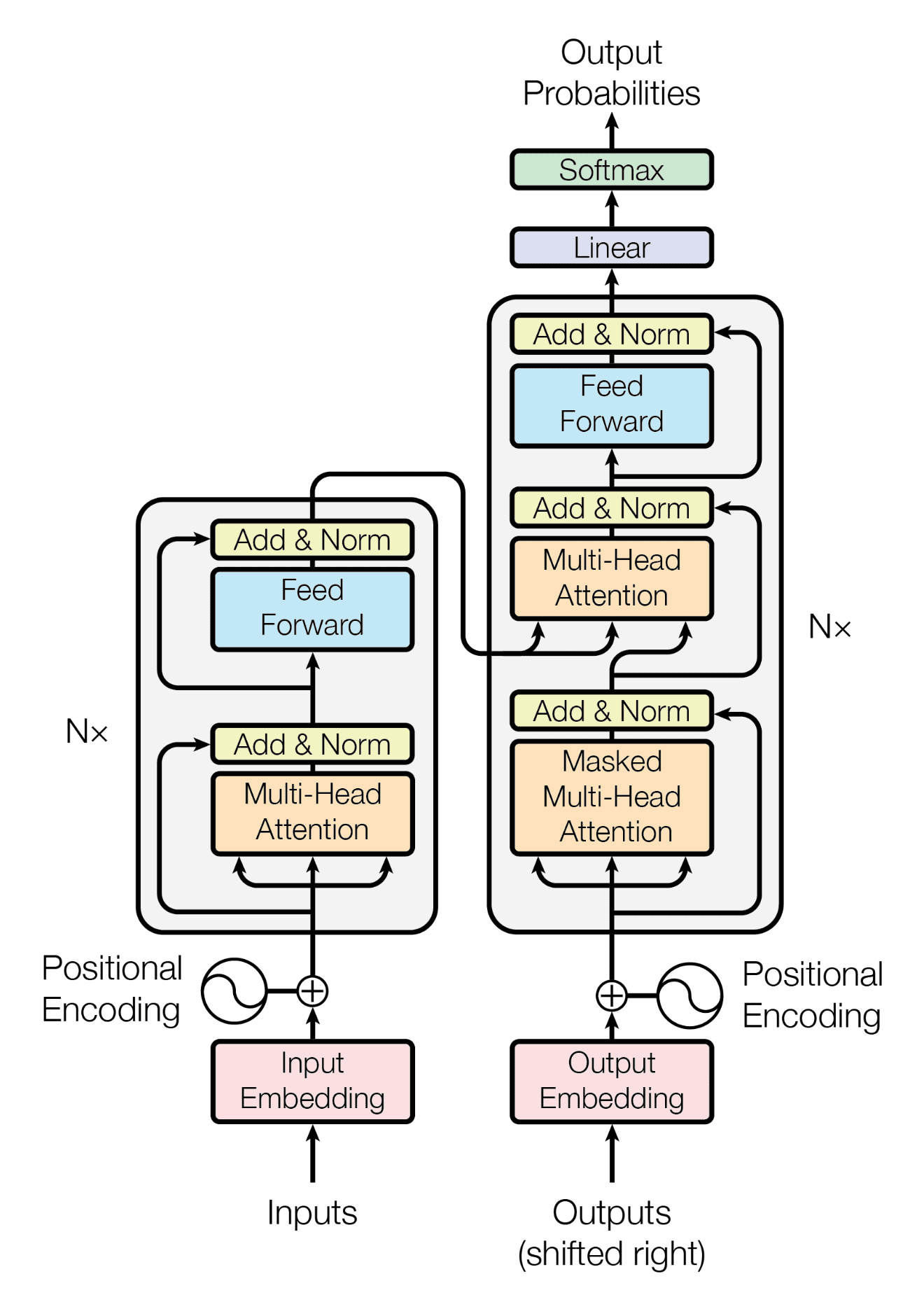
To understand the core engine of nanoGPT, here is the standard Transformer block architecture that powers the model:
Network Topology Details
- Multi-Head Self-Attention: Allows the model to look at different parts of the input sequence simultaneously, capturing both short and long-range dependencies.
- Layer Normalization & Residual Connections: Stabilizes the deep network during training by normalizing the inputs to each layer and allowing gradients to flow directly through skip connections.
- Causal Masking: Ensures that the model only attends to past tokens when predicting the next token, preserving the autoregressive nature of text generation.
References
nanoGPT is based on the paper Attention is all you need.
You can fork the project on GitHub to add more features to the project.